
Grammarly vs Jasper vs ChatGPT: Where Each Writing Tool Has the Edge

For more details, visit Grammarly official website
The AI writing tool market has split into distinct categories, and treating them as interchangeable is a mistake. Grammarly built its reputation on grammar correction. Jasper AI targets marketing teams who need on-brand copy at scale. ChatGPT became the default general-purpose writing assistant. Claude carved out a niche for nuanced long-form content. Meanwhile, specialized players like Writesonic, Copy.ai, and Wordtune serve narrower but valuable functions.
This comparison identifies exactly where each tool wins and where it falls short across seven tools and eight dimensions: grammar accuracy, long-form capability, SEO features, brand voice, plagiarism detection, tone adjustment, pricing, and integrations. See Google helpful content guidelines for more.
Grammarly: The Grammar and Style Specialist
Grammarly occupies a unique position because it started as a grammar checker long before generative AI became mainstream. That foundation gives it a depth in language correction that none of the other tools here can match. Its AI writing features under the GrammarlyGO banner augment rather than replace its core correction engine.
Core Strengths and Pricing
Grammarly offers three tiers: free with basic grammar correction, Premium at $12/month (billed annually) with style improvements and tone detection, and Business at $15/month per member with team style guides and analytics. The free tier catches more grammatical errors than most writers realize — misplaced modifiers, subject-verb agreement failures, and comma splices that other tools breeze past.
What separates Grammarly’s engine from competitors is contextual understanding. It doesn’t just flag errors; it explains why something is wrong and offers specific corrections. The tone detection analyzes text against formality, inclusivity, confidence, and friendliness dimensions. For business emails and academic writing, this feedback is genuinely useful.
Where Grammarly Falls Short
GrammarlyGO’s generative capabilities feel bolted on compared to dedicated AI writers. There’s no template library comparable to Jasper’s, no conversation memory like ChatGPT’s, and no long-form document generation. Grammarly is also weaker on SEO — it won’t suggest keywords, optimize headings, or analyze competitor content. Plagiarism detection requires a paid plan.
Pros and Cons
- Pros: Best-in-class grammar correction; excellent tone detection; works across browsers, desktop, and mobile; strong free tier; team analytics on Business
- Cons: Generative AI is basic; no SEO optimization; limited templates; plagiarism needs paid plan; AI writing is generic
Jasper AI: The Marketing Copy Machine
Jasper was built for marketing teams, and that focus shows in every feature. At $49/month for Creator and $69/month for Pro, it’s the most expensive option — but for teams producing ad copy, product descriptions, and campaigns, the ROI can be substantial. The template library contains over 50 frameworks including AIDA, PAS, and Before-After-Bridge.
Brand Voice and Templates
Jasper’s brand voice feature lets teams upload style guides and existing content to train the AI on a specific voice. This isn’t just a tone slider — it’s a knowledge base the AI references when generating copy. The Pro plan supports multiple brand voices simultaneously, essential for agencies managing client accounts.
The template system is Jasper’s most underappreciated advantage. Instead of prompting from scratch, you select a framework, fill in context fields, and get structured output. A product description template asks for product name, features, audience, and tone — then generates copy formatted for Amazon, websites, or social media.
Jasper’s Limitations
For anything outside marketing copy — academic writing, technical documentation, creative fiction — Jasper isn’t the right tool. Long-form blog posts beyond 1,500 words require significant manual editing to maintain coherence. The AI tends toward sales-oriented language that feels inappropriate for neutral content. Jasper also lacks built-in grammar checking, plagiarism detection, and conversational flexibility.
Pros and Cons
- Pros: Excellent marketing template library; brand voice training; campaign-level generation; strong short-form copy; Surfer SEO integration
- Cons: Expensive at $49-$69/month; poor for non-marketing writing; long-form needs heavy editing; no grammar checking
ChatGPT Plus: The Versatile Generalist
ChatGPT Plus at $20/month gives access to GPT-4o, custom GPTs, image generation, web browsing, and data analysis. For pure writing versatility, no other tool at this price matches what it offers. It handles emails, essays, blog posts, code documentation, and creative writing with equal competence.
Why ChatGPT Excels
The conversational interface is the killer feature. You iterate on output in real time — ask for a more formal tone, request different structure, challenge an argument, and the AI adjusts immediately. This back-and-forth workflow produces better results than single-shot generation because writing is inherently iterative. ChatGPT also maintains context across long conversations, so you can develop a 3,000-word article section by section without re-explaining your thesis.
Custom GPTs add another dimension — create specialized assistants for technical docs, social posts, or academic editing, each with its own instructions. This effectively gives you multiple specialized tools within one subscription.
Where ChatGPT Struggles
There’s no passive grammar checking — it can proofread if asked but won’t flag errors as you type. No plagiarism detection, no SEO analysis, no brand voice training. Output quality varies with prompt skill. ChatGPT also defaults to verbose, somewhat generic prose that needs editing for distinct voice. For more on ChatGPT vs Jasper specifically, see our Jasper vs ChatGPT writing comparison.
Pros and Cons
- Pros: Exceptional versatility; conversational iteration; custom GPTs; image generation included; strong long-form with GPT-4o
- Cons: No passive grammar check; no plagiarism or SEO features; output can be verbose; quality depends on prompting
Claude Pro: The Nuanced Long-Form Writer
Claude Pro at $20/month is the strongest alternative to ChatGPT for writing, particularly for long-form content where nuance and stylistic range matter. The 200K context window processes entire documents and produces writing that maintains consistency across thousands of words.
Claude’s Writing Quality Advantage
Claude produces less formulaic prose than ChatGPT. Where ChatGPT defaults to a recognizable AI pattern — thesis, three points, summary — Claude adopts varied structures, uses subtext, and maintains a consistent authorial voice. For creative writing, essays, and content where “sounding human” matters, Claude has a measurable edge. The model also handles ambiguity and complex instructions better, following nuanced directives more faithfully.
Claude’s Limitations
Claude lacks ChatGPT’s ecosystem — no custom GPTs, no plugin marketplace, no image generation, fewer integrations. There’s no grammar checking, plagiarism detection, or SEO features. Safety guardrails can feel restrictive for persuasive marketing copy or edgy creative content. It’s purely a generative tool requiring pairing with others for a complete pipeline.
Pros and Cons
- Pros: Best long-form quality at this price; 200K context window; less formulaic than ChatGPT; handles nuance well; strong voice consistency
- Cons: No plugin ecosystem; no grammar or SEO features; restrictive guardrails; fewer integrations; no image generation
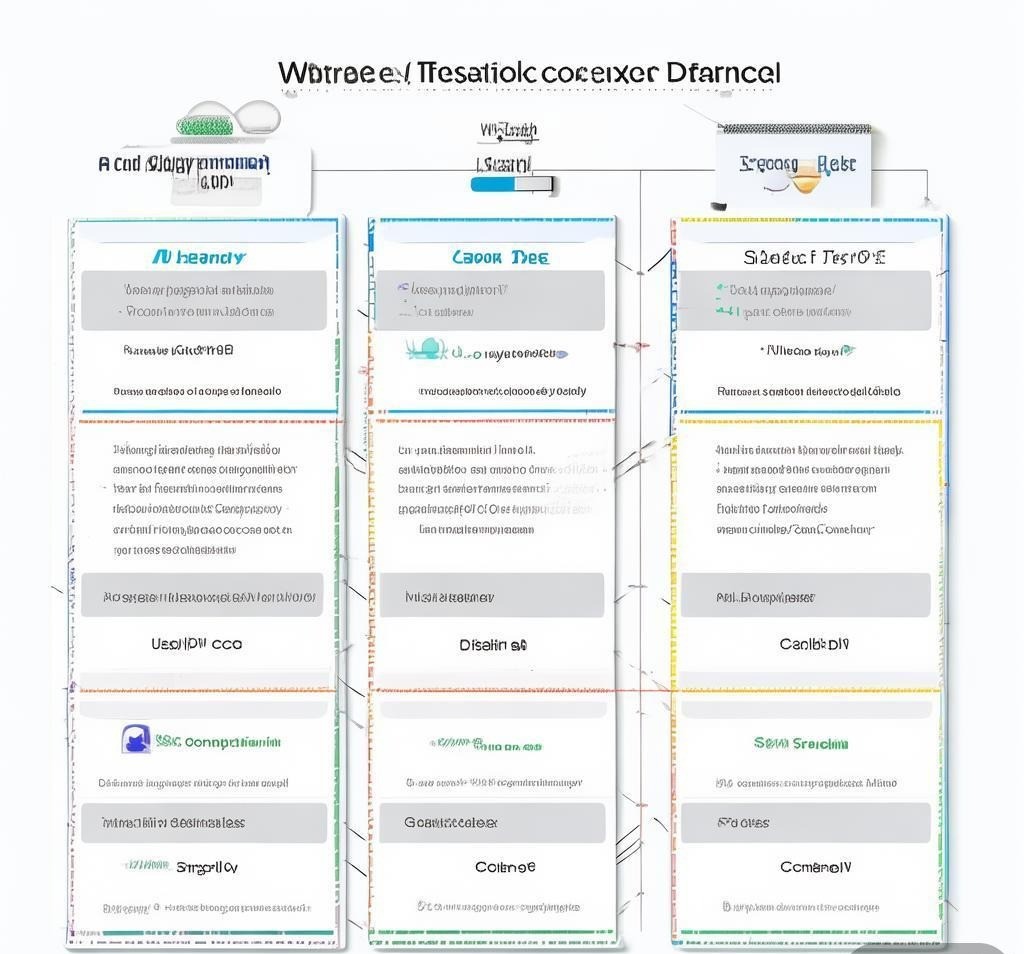
Writesonic, Copy.ai, and Wordtune: Specialized Options
Writesonic ($16/month): SEO-First Content
Writesonic combines generative AI with keyword research, SERP analysis, and on-page optimization — a combination none of the other tools offer natively. You provide a target keyword, get a content brief with suggested headings and competitor analysis, then generate optimized content. The integrated SEO workflow eliminates juggling between research tools, AI writers, and SEO checkers. Writing quality is competent but sits below Claude and ChatGPT for stylistic flair. For more on AI tools for blog content, see our AI blog post generator guide.
- Pros: Best native SEO features; integrated keyword research; bulk generation; competitive at $16/month
- Cons: Writing quality below Claude/ChatGPT; tends toward generic listicles; free tier very limited
Copy.ai (Free/$49/mo Pro): Workflow Automation
Copy.ai targets marketing teams wanting automated content workflows. Its workflow builder creates multi-step pipelines — research a topic, generate outlines, write section drafts, assemble complete articles. Individual writing quality is solid but average. The automation layer justifies the $49/month price for teams producing 20+ pieces weekly.
- Pros: Unique workflow automation; generous free tier; good template variety; team collaboration
- Cons: Expensive at $49/month; average individual writing quality; no grammar or SEO features
Wordtune ($10/month): Sentence-Level Precision
Wordtune takes a different approach — improving existing text at the sentence level. Highlight a sentence and get 5-10 rewrite alternatives across tones: formal, casual, confident, concise. The rewrite quality is impressive, preserving meaning while genuinely changing expression. Ideal as a companion tool with clean Google Docs integration.
- Pros: Excellent sentence rewriting; affordable at $10/month; great Google Docs integration; preserves meaning well
- Cons: Can’t generate from scratch; limited to sentence-level; no SEO or plagiarism features

Pricing and Features Comparison
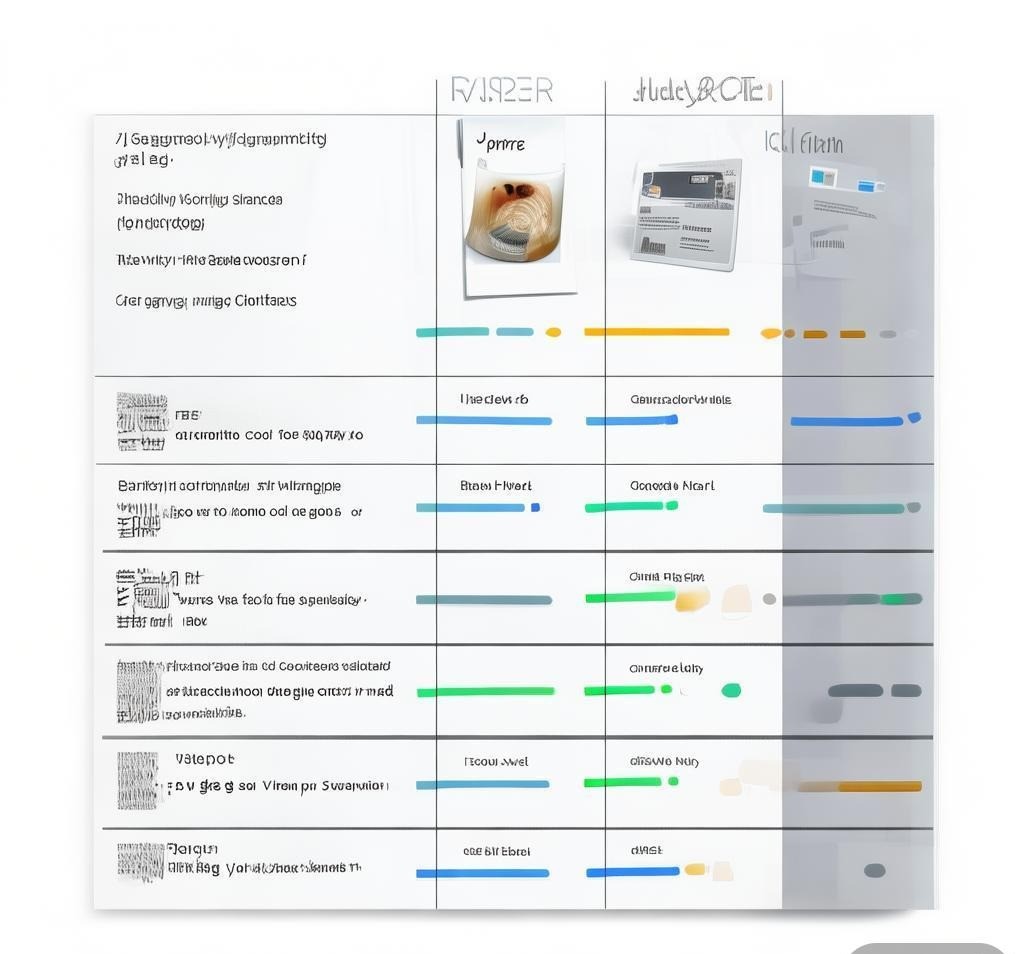
| Tool | Starting Price | Best For | Grammar Check | SEO Features | Brand Voice |
|---|---|---|---|---|---|
| Grammarly | Free / $12/mo | Grammar and style correction | Yes (best) | No | Yes (Business) |
| Jasper AI | $49/mo | Marketing copy and campaigns | No | Yes (Surfer) | Yes (best) |
| ChatGPT Plus | $20/mo | Versatile general writing | On-request | No | No |
| Claude Pro | $20/mo | Long-form nuanced content | No | No | No |
| Writesonic | $16/mo | SEO-optimized content | No | Yes (best native) | No |
| Copy.ai | Free / $49/mo | Content workflow automation | No | No | Limited |
| Wordtune | $10/mo | Sentence-level rewriting | No | No | No |
Writing Quality Scores
Output quality varies significantly across tools and use cases. The following scores (1-10 scale) reflect performance across grammar accuracy, stylistic range, long-form coherence, and readability based on common writing tasks: business emails, blog posts, marketing copy, and academic explanations.
| Tool | Grammar Accuracy | Stylistic Range | Long-form Coherence | Readability |
|---|---|---|---|---|
| Grammarly (correction) | 9.5 | 7 | N/A | 9 |
| GrammarlyGO (gen.) | 8 | 5 | 5 | 7 |
| Jasper AI | 7.5 | 6 | 6 | 7.5 |
| ChatGPT Plus | 8.5 | 8 | 8 | 8 |
| Claude Pro | 9 | 9 | 9.5 | 8.5 |
| Writesonic | 7.5 | 5 | 6.5 | 7 |
| Copy.ai | 7 | 5.5 | 5.5 | 6.5 |
| Wordtune | 8 | 7.5 | N/A | 8 |
Claude’s 9.5 for long-form coherence reflects its ability to maintain argument structure and voice across 3,000+ word documents. Grammarly’s 9.5 for grammar accuracy reflects its correction engine specifically — not its generative capabilities, which score considerably lower.
Plagiarism Detection and AI Content Concerns
Only Grammarly and Writesonic offer built-in plagiarism detection here. Grammarly scans against web content and ProQuest’s academic database (Premium plan). Writesonic includes a basic checker on paid plans. The rest require third-party tools like Copyscape or Originality.ai.
The broader concern is AI content detection. Claude and ChatGPT produce more natural prose that’s harder to flag as AI-generated, while Jasper’s template-based output has more recognizable patterns. For strategies on navigating this, our guide on AI content detection covers current approaches. Practically, most AI content benefits from human editing regardless — improving flow, adding perspective, and catching errors makes content better for readers.
Integration and Workflow Compatibility
Grammarly wins on integration breadth — browser extensions, desktop apps, mobile keyboards, and direct integrations with Google Docs, Word, Slack, and Notion. It’s available everywhere you write. ChatGPT offers desktop and mobile apps with API access. Claude is currently web-only with API. Jasper integrates with Surfer SEO and various CMS platforms. Writesonic has a WordPress plugin. Wordtune’s Google Docs integration makes it smooth for Workspace users.
For teams committed to specific platforms, compatibility should be a decisive factor. A tool you can’t access in your writing environment — no matter how capable — is a tool you won’t use.
Frequently Asked Questions
Can Grammarly replace ChatGPT for writing?
Not for content generation. GrammarlyGO can brainstorm and generate paragraphs, but quality and versatility fall well short of ChatGPT or Claude. Grammarly excels at improving existing text. The most effective approach combines a generative AI for drafting with Grammarly for correction and refinement.
Which tool is best for SEO blog content?
Writesonic offers the most complete native SEO workflow. For the best combination of quality and SEO, many professionals pair Claude or ChatGPT for drafting with a dedicated SEO tool like Surfer SEO for optimization. Jasper with Surfer integration is another strong option.
Is Claude Pro worth paying for over the free tier?
The free tier has significant usage limits and throttling during peak times. Pro provides 5x usage, priority access, and latest model versions. For regular long-form writing, free tier limits become frustrating quickly. Pro pays for itself in productivity if you generate more than a few articles weekly.
Should I use multiple AI writing tools together?
Absolutely. A common high-quality workflow: Claude or ChatGPT for drafting, Grammarly for correction, Writesonic or Surfer for SEO, Wordtune for final polishing. This layered approach costs $32-$52/month total but produces meaningfully better content than any single tool.
How do these tools handle confidential content?
Anthropic states Claude doesn’t train on user conversations by default. ChatGPT lets you opt out of training in settings. Grammarly may use anonymized data for product improvement. Jasper and Copy.ai offer enterprise plans with data isolation. For sensitive business content, review data policies and consider enterprise tiers with contractual protections.

Final Recommendation: Which Tool Should You Choose?
For general-purpose writing: ChatGPT Plus ($20/month) offers the best combination of quality, flexibility, and features. If you want better long-form prose, Claude Pro at the same price is the stronger writer with fewer supporting features.
For marketing teams at scale: Jasper AI justifies $49-$69/month through brand voice training, template libraries, and campaign workflows that save real time. The specialization is genuine for marketing copy production.
For grammar correction: Grammarly remains unmatched. The free tier is worth installing everywhere, and Premium at $12/month adds real value through tone detection and sentence rewrites. Every writer benefits from Grammarly running in the background.
For SEO-focused content: Writesonic ($16/month) provides the most integrated keyword-to-article pipeline, saving coordination time between research, writing, and optimization tools.
For budget-conscious writers: Grammarly Free plus Claude’s free tier plus Wordtune Free costs nothing and covers essentials. Upgrade one tool at a time based on your most pressing need.
The most pragmatic approach for serious content creators is a two-tool stack: one generative AI writer (ChatGPT, Claude, or Jasper) paired with Grammarly for correction. This uses each tool’s genuine strength. Add Writesonic for SEO or Wordtune for Google Docs editing. Spending $32-$62/month on a curated stack outperforms any single $69/month subscription for real-world writing outcomes.
Disclosure: This article was generated using AI tools and reviewed by our editorial team for accuracy and quality.
Recommended AI Tools
If you found this article helpful, you might also want to explore these tools:
- My Color Analysis AI - AI-powered tool for personalized color a
- Reflect AI - Chat Assistant - AI platform answering questions on vario
- Supercreator AI for OnlyFans - All-in-one OnlyFans management platform
- Rise Above - Build habits, Reach goals - AI-powered app for personal and professi